The best place for a home sauna is a spot with level, moisture-resistant flooring, enough ceiling height, the right electrical supply, and a short walk to a shower or a place to cool down. In most Southern California homes, that points to one of three places: the garage, a spare room or home gym, or a pad in the backyard. Which one fits you depends on how much space you have, whether you want a traditional or infrared sauna, and how you like to use it. Here is how each option compares, and what every location needs before the sauna arrives.
First, decide traditional or infrared
The type of sauna you choose narrows down where it can go. A traditional sauna heats the air in the room, typically to 160 to 200°F, and usually needs a 230V dedicated circuit installed by a licensed electrician. An infrared sauna warms your body directly at a lower air temperature, around 120 to 150°F, and many models plug into a standard 115V outlet.
That difference matters for placement. An infrared sauna that runs on a household outlet can go almost anywhere you have the floor space. A traditional sauna needs a location where a dedicated circuit can be run without much trouble, which often makes the garage or backyard the easier choice. Tylo builds both styles, and our Sauna FAQ walks through the differences in more detail.
Option 1: The garage
The garage is one of the most popular spots for a home sauna, and for good reason. Most garages already have a concrete floor, which is exactly the kind of level, moisture-resistant surface a sauna needs. The electrical panel is often close by, which can make running a dedicated circuit simpler. And it keeps the heat and humidity away from your living spaces.
Things to plan for: make sure there is enough clearance around the sauna, and check that it will not crowd your parking. Think about where you will cool down and rinse off afterward, and whether the space stays comfortable on a summer afternoon. A garage that bakes in the heat is not where you want to sit before or after a session.
Option 2: A spare room, home gym, or primary suite
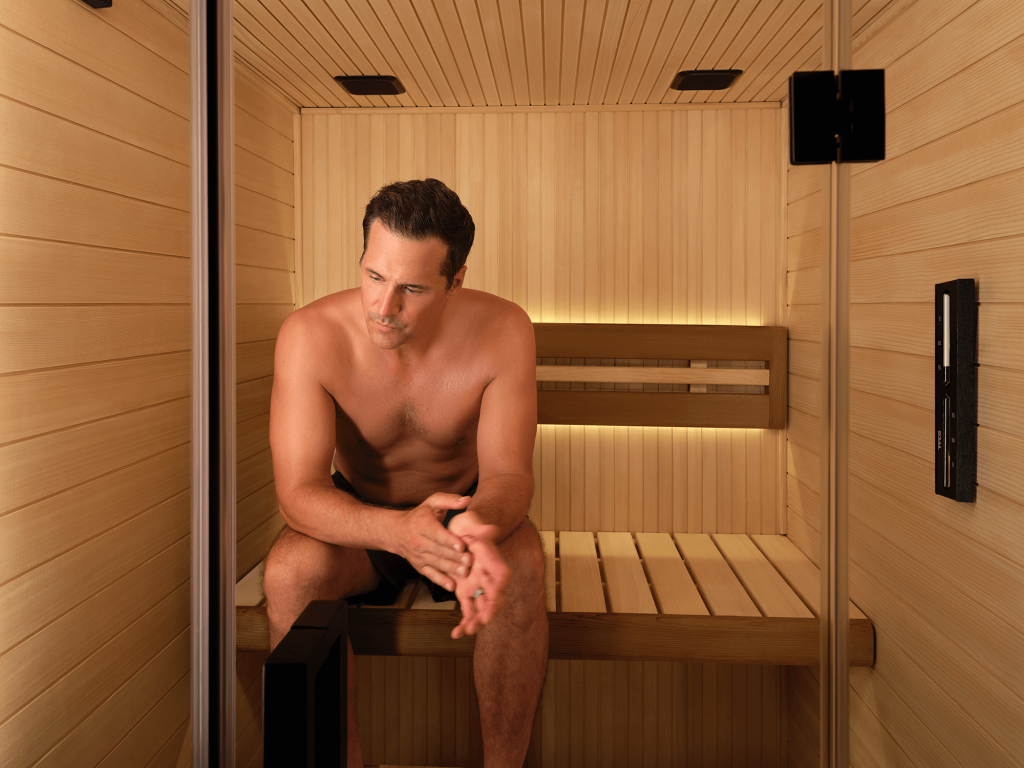
An indoor room puts the sauna steps from your bedroom or shower, which makes it easy to use every day. It is a natural fit for a compact infrared sauna, especially a model that plugs into a standard outlet.
Things to plan for: avoid carpet. Saunas should sit on tile, sealed concrete, or vinyl. Check the ceiling height, since most saunas need about 7 feet or more. Make sure the room has decent ventilation, and remember that a traditional sauna will need a dedicated circuit, which may mean more electrical work in a finished room.
Option 3: The backyard
An outdoor sauna turns the backyard into a wellness space, and in Southern California’s mild climate it can be used year round. It is also the most natural setup if you want to pair the sauna with a hot tub or a cold plunge, moving between heat and cool water in one place. We covered that combination in our post on the benefits of pairing a sauna and a cold plunge.
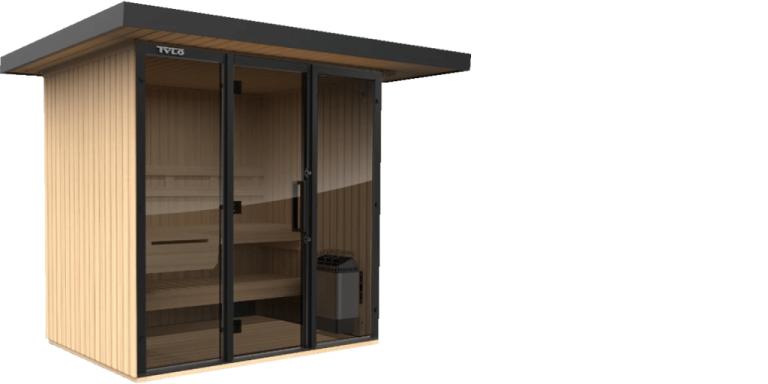
Things to plan for: an outdoor sauna should be installed on a solid foundation, such as a concrete pad, deck, or patio. It needs to be a model rated for outdoor use, and it needs power run safely to it. Think about sun exposure and winter rain, how far the sauna sits from the house, and where you will rinse off. If you live near the coast, ask about materials and finishes that hold up to salt air.
What every location needs
- Space: Home saunas range from compact 1 person units of about 3 feet by 3 feet up to family size models of 6 by 8 feet or larger. Measure the spot and leave room to open the door and walk in comfortably.
- Ceiling height: Plan for about 7 feet or more, depending on the model.
- Flooring: Level and moisture-resistant: tile, sealed concrete, or vinyl. Avoid carpet. Outdoor saunas need a concrete pad, deck, or patio foundation.
- Power: Infrared saunas usually plug into a standard 115V outlet. Traditional saunas typically need a 230V dedicated circuit installed by a licensed electrician. Electrical work should follow local code, and some cities require permits, so check before you start.
- Ventilation: Good airflow keeps the sauna comfortable and protects the room around it, especially indoors.
- A place to cool down: Being close to a shower, an outdoor rinse, or a shaded seat makes the whole routine more enjoyable.
Common questions about where to put a home sauna
Can you put a sauna in a garage?
Yes. A garage is one of the most common places for a home sauna, because the concrete floor is level and moisture-resistant and the electrical panel is often nearby. Plan for clearance around the sauna, a dedicated circuit for a traditional model, and a place to cool down afterward.
Can a sauna go outside in Southern California?
Yes, as long as you choose a model rated for outdoor use and install it on a solid foundation such as a concrete pad, deck, or patio. Southern California’s mild weather makes an outdoor sauna usable year round.
Does a home sauna need a special electrical outlet?
It depends on the type. Many infrared saunas plug into a standard 115V outlet. Traditional saunas typically need a 230V dedicated circuit installed by a licensed electrician.
How much space do you need for a home sauna?
A 1 person sauna can be as small as about 3 feet by 3 feet, while family size models run 6 by 8 feet or larger. You will also need about 7 feet of ceiling height and room to open the door.
Find the right sauna for your space
The easiest way to choose is to see the options in person and talk through your space with someone who has done it before. Visit our showroom at 1621 E. Spring St. in Long Beach to see our Tylo saunas, and bring the measurements and a few photos of the spot you have in mind. California Home Spas & Patio offers professional delivery and setup options, as well as contractor recommendations for larger installations, and financing is available. We are open Monday through Saturday from 10 to 6 and Sunday from 12 to 5, or call (562) 283-0595.
Saunas support relaxation and healthy routines but are not a substitute for medical care. If you have a medical condition, check with your healthcare provider before use.